Recycling and Sustainability for Tree Surgeons St Johnswood
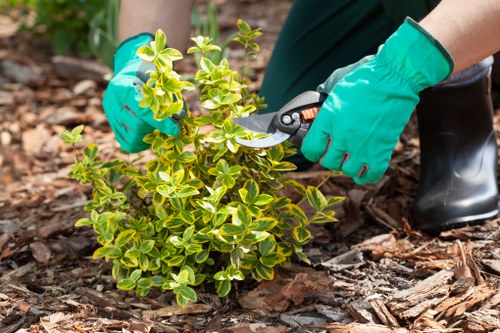 Tree Surgeons St Johnswood is committed to delivering tree care with a clear focus on recycling, re-use, and lower-carbon working practices. Every stage of our work is planned to reduce waste where possible, from careful dismantling and sorting on site to responsible transport of green waste and timber. Our aim is simple: to make arboricultural work more sustainable without compromising safety, quality, or reliability. By keeping an eye on what can be repurposed, composted, chipped, or sent for specialist processing, we help reduce the amount of material that ends up in landfill.
We operate with a recycling percentage target of 90% for suitable green waste streams, with the long-term ambition of improving this figure through better segregation and more local processing. That target reflects our belief that most tree surgery by-products have value. Branches, trunk sections, leaves, and woodchip can often be transformed into mulch, biomass fuel, habitat material, or other useful outputs. In practical terms, this means our teams sort materials as they work, separating reusable timber from mixed arisings and keeping contamination to a minimum.
Our approach to Tree Surgeons St Johnswood recycling is also shaped by local waste systems and borough-level expectations around separation. In many nearby areas, households and businesses are already familiar with separating garden waste, wood, metal, and general refuse, and we apply the same discipline to our own operations. Different waste streams are treated differently, and that is particularly important in an urban setting where space is limited and collection routes must be efficient. We support these local habits by ensuring that recyclable green materials are directed into the most appropriate recovery pathway.
 One of the key ways we reduce environmental impact is by using local transfer stations for handling green waste and timber arisings. When materials are taken to nearby facilities, travel distances are shortened, fuel use is reduced, and waste can move through the recovery chain more quickly. This localised approach is especially useful in and around St John’s Wood, where traffic and congestion can add unnecessary emissions if journeys are poorly planned. By working with efficient transfer points, Tree Surgery St Johnswood operations become more streamlined and considerably less wasteful.
At these transfer stations, suitable materials may be weighed, checked, and routed to the next stage of processing. Clean wood can be chipped or baled, while mixed green waste can be directed toward composting or biomass recovery. We pay attention to contamination because the cleaner the load, the more recycling options remain open. This is a practical part of our sustainability work: not just moving waste away, but making sure it enters a productive system. That process helps support circular use of resources and lowers the overall carbon cost of tree care.
We also understand that sustainability is not only about what happens after the job is finished. It begins with how work is organised. Our crews plan cuts, dismantling methods, and load sizes to avoid unnecessary transport and reduce the number of journeys needed. In line with the broader boroughs’ approach to waste separation, we keep recyclable timber, green waste, and non-organic debris apart where possible. This makes the material easier to process and helps prevent valuable resources from being lost to mixed disposal.
 As part of our wider sustainability commitment, Tree Surgeons St Johnswood also supports partnerships with charities. Where suitable, we identify timber sections, woodchip, and other materials that can be passed on to community groups, environmental projects, and charitable organisations for further use. Some timber may be useful for habitat creation, garden projects, or educational spaces, while woodchip can support paths, borders, and moisture retention in planted areas. These partnerships help extend the life of materials that would otherwise be processed as waste.
We place particular value on giving materials a second purpose before recycling. For example, larger timber offcuts may be suitable for craft, conservation, or small-scale community applications, depending on condition and demand. This is where our work with charities becomes especially meaningful: it encourages practical reuse and supports organisations that benefit from low-cost or donated resources. Tree Surgeon St Johnswood activities therefore contribute not just to disposal efficiency, but to local social and environmental value as well.
Our sustainability choices also include the vehicles we use. The team operates low-carbon vans designed to reduce fuel consumption and emissions across the borough. These vans are selected for efficiency, maintained for optimal performance, and loaded carefully to avoid wasted trips. In an area where access routes can be busy and parking space is tight, lower-emission transport makes a real difference. Combined with smart routing and local transfer station use, the van fleet helps cut the carbon footprint associated with tree surgery work.
How We Keep Tree Surgery Recycling Practical
 Sustainability only works when it is practical on real jobs. That is why our crews use a straightforward system for sorting materials on site. Wood, brash, leaves, and soil are handled separately wherever possible, and any recyclable metal fixings or fixtures are removed from timber before onward processing. This helps ensure that each material goes to the right place, whether that is composting, biomass recovery, reuse, or specialist recycling. Tree surgeons in St Johnswood benefit from this approach because it keeps sites tidy and waste removal efficient.
Our recycling process also supports wider local environmental aims. Boroughs across London have increasingly focused on better waste separation, reduced contamination, and improved recovery rates, and we align our operations with that same direction. By mirroring those standards in our own work, we help maintain consistency between private tree care and public waste objectives. It is a small but important way of supporting a cleaner, more resource-efficient local environment.
A Lower-Carbon Way Forward
For us, sustainability is not a single action; it is a set of connected decisions. Choosing local transfer stations, working with charities, using low-carbon vans, and keeping waste streams separated all contribute to a smaller environmental footprint. We continue to look for ways to improve our Tree Surgeons St Johnswood sustainability performance, especially through better sorting, cleaner recovery routes, and increased reuse of suitable materials.
 Looking ahead, our goal is to keep raising the proportion of material that is recycled or repurposed while reducing transport emissions wherever we can. Tree work will always generate organic by-products, but those by-products do not have to be treated as waste. With careful planning and responsible handling, they can become useful resources for composting, biodiversity, fuel, and community projects. That is the standard we work toward every day: practical arboriculture with environmental responsibility at its core.